Key Takeaways
- Choline is an essential nutrient that you get from your diet and also synthesize in your liver, which your body uses in several important ways.
- Choline is needed for brain function and cellular health. It can also be utilized in the methylation cycle as a methyl donor.
- Genetic variants can impact how well you create choline or how you convert between types of choline.
- Studies show that genetic variants significantly impact how much choline you need from your diet in order to maintain adequate supplies.
- Personalize your choline based on your genetic variants: PEMT T/T carriers benefit most from supplementation, while BHMT A carriers may prefer choline over betaine. Slow COMT may also interact with betaine supplements.
Background
If you've ever walked into a room and wondered why you went in there, you're not alone. Memory issues are a common complaint, whether due to aging or brain fog. One underappreciated piece of the puzzle is choline, which is a nutrient central to how the brain works. Let me explain why, and then I'll get into a new study connecting the dots between choline, estrogen, and postmenopausal brain function. (It's relevant even if you don't have a postmenopausal brain.)
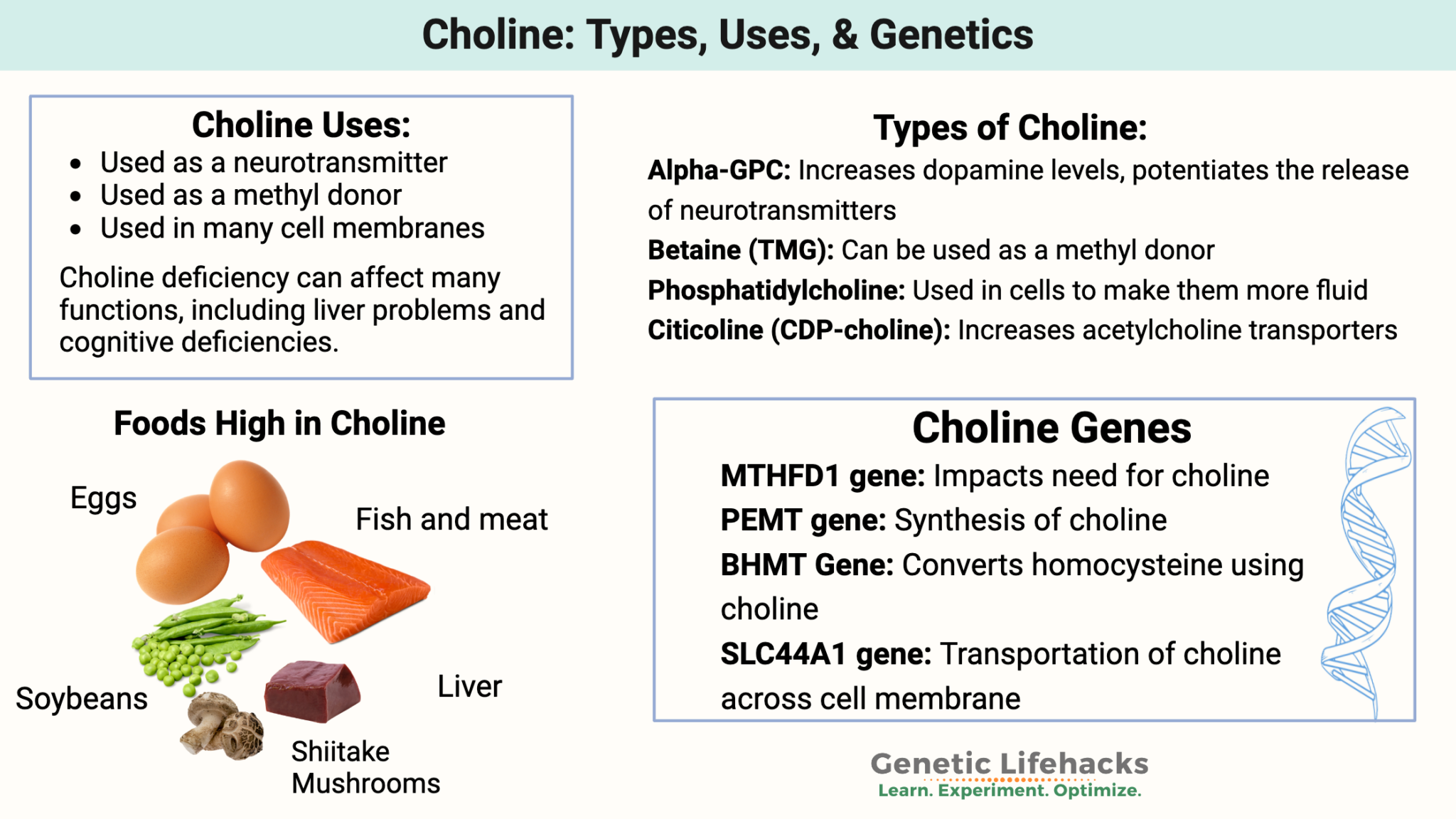
Choline and cognition: In the brain, choline is essential in a couple of ways. First, it is incorporated into the cell membrane of neurons in the form of phosphatidylcholine. This keeps brain cells flexible and able to function well. Just as important, choline is also used for acetylcholine, a neurotransmitter involved in learning, memory, mood, and muscle control.
We can synthesize some choline with the help of the PEMT enzyme, but we also need choline from the diet. Choline is especially essential in pregnancy, with higher maternal choline intake correlating to higher IQ in the child. The PEMT gene is upregulated by estrogen, increasing choline availability in pregnancy.
Which brings me to a new study on choline and brain function after menopause...
When estrogen levels decrease postmenopause, the PEMT gene is no longer upregulated, leading to lower endogenous choline synthesis.
This new study assessed the effect of supplemental choline on brain function in postmenopausal women. The researchers looked at brain imaging and functional connectivity three hours after the consumption of a choline supplement. The results showed that choline improved functional connectivity under conditions of memory load. The authors conclude that "choline may increase brain functional efficiency in low estrogenic conditions like menopause". A number of prior studies also show a connection between dietary choline intake and post-menopausal brain function. The choline boost from PEMT expression may be why some women find that HRT helps their brain, and increasing choline may be an alternative for women who don't want to take hormones after menopause.
This week, I've updated and overhauled my article "Which type of choline works best with your genes".
Whenever I bring up choline, I inevitably get emails from folks who are concerned about TMAO and worried about eating choline-rich foods such as eggs or beef. TMAO is a gut metabolite produced more abundantly when eating choline-rich foods, and higher TMAO levels correlate with increased cardiovascular disease. However, there are questions on the causation here.
Another new study looked at the effect of swapping beans for red meat as a protein source. The study was conducted in healthy adult males, avoiding the effect of estrogen on PEMT. After six weeks, the results showed no differences in TMAO or inflammation levels between groups. However, plasma choline levels did drop in the 'beans' arm of the study. That said, this was in healthy men (avg. age 37) and doesn't mean higher TMAO is benign in someone with diabetes or metabolic syndrome
Newsletter delivery changes: The platform that I currently use for the newsletter is making some changes, so I'll be moving this newsletter to Substack over the next couple of weeks.
You'll still get the newsletter in your email, but the sending domain may change (and you may need to whitelist it if the email ends up in spam).
If you're not familiar with Substack, it is a site where a lot of writers publish newsletters and articles, but with some added interactive features. If you create a free Substack sign-in, you'll be able to post comments to the newsletter each week. This will give Genetic Lifehacks readers a way to interact and ask questions -- a little bit of community in your quest for optimizing your health!
Other Genetic Lifehacks updates and In the Works:
• Alpha-Gal Syndrome is updated this week, timely for the summer tick season. • An article on norepinephrine genes is in the works for next week. • For anyone with a Sequencing.com VCF file, I have a beta version of a converter that you can try out. Keep in mind that it is just an initial version, and you'll need to check back for updates. This is just for Sequencing VCF file and likely won't work for other VCF files at this point.