Key Takeaways
- Norepinephrine is both a neurotransmitter that helps with focus, attention, and motivation, and a hormone that affects blood pressure, heart rate, and stress response.
- In the brain, most norepinephrine is produced in the locus coeruleus. It activatesα1, α2, and β adrenergic receptors to fine-tune neurological pathways.
- Norepinephrine is synthesized from dopamine by DBH, cleared from the synapse primarily via the norepinephrine transporter (NET/SLC6A2), and then metabolized by MAO‑A and COMT.
- Genetic variants can shift the baseline levels of norepinephrine and the response to drugs.
- Altered norepinephrine signaling is implicated in ADHD, Alzheimer’s, ME/CFS, Parkinson’s, long Covid, POTS, and mood disorders.
Background
Norepinephrine (also called noradrenaline) is a neurotransmitter that doesn't get as much press as serotonin or dopamine. But norepinephrine makes all the difference for focus, motivation, and attention.
Norepinephrine levels are kind of a Goldilocks situation -
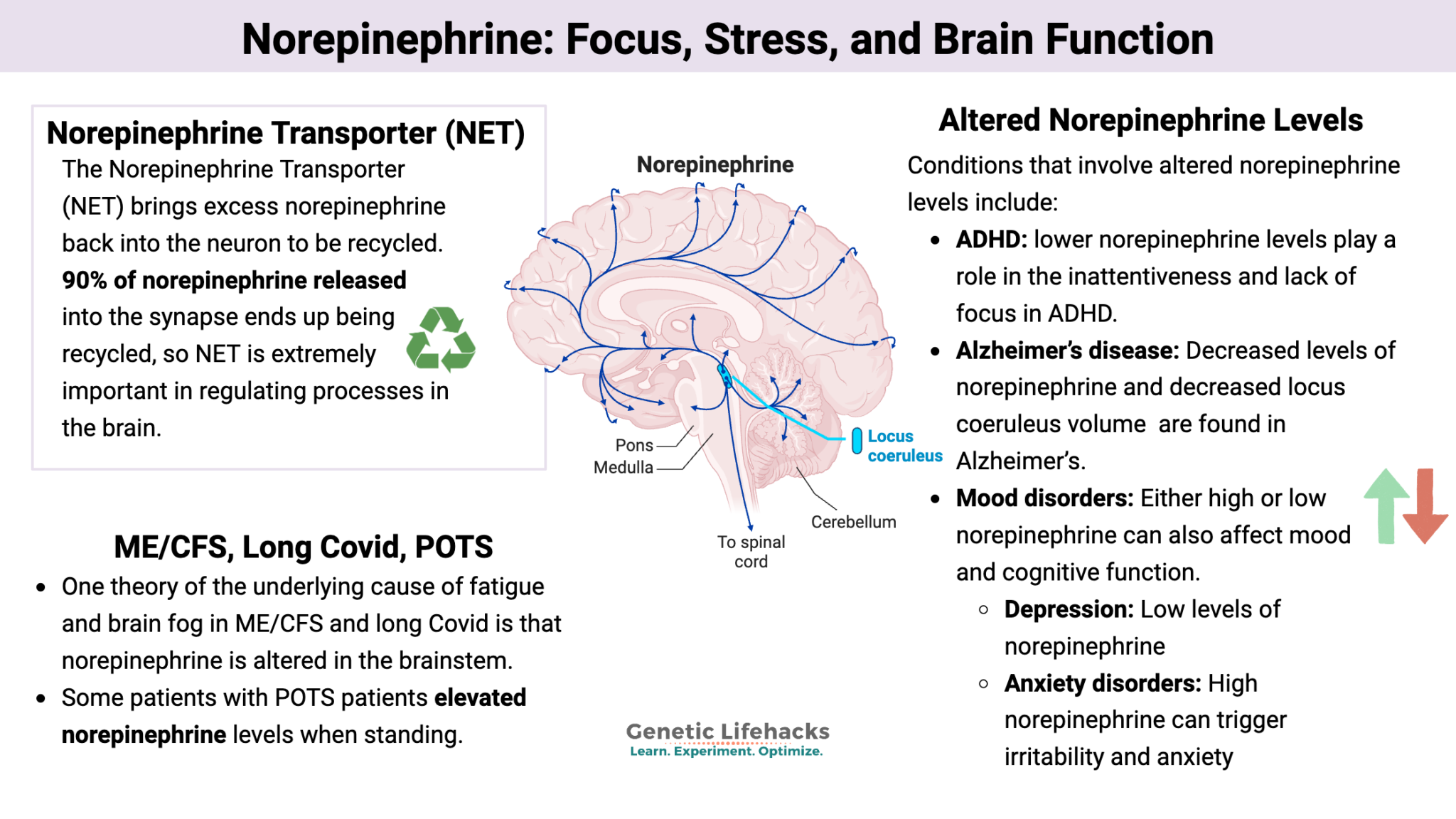
• too low is associated with brain fog and low drive, • too high may cause anxiety and a “noisy” brain • the sweet spot in the middle In the area of the brainstem called the locus coeruleus, about 30,000 neurons send norepinephrine projections throughout your brain. It's synthesized from dopamine and released into the synapse of the neurons. Norepinephrine helps you stay alert, attentive, and engaged with the task in front of you. These neurons signal through three main receptor families – α1, α2, and β adrenergic receptors – and each one is more active at different norepinephrine levels.
Genetic variants (of course) affect how much norepinephrine is synthesized, how it is regulated in the synapse, and how the signal is received.
You may immediately be thinking of brain fog or ADHD, but norepinephrine may also play a role in ME/CFS, long Covid, Alzheimer's, and Parkinson's.
In ADHD, for example, insufficient norepinephrine tone or rapid reuptake in the prefrontal cortex is tied to problems with focus and task engagement. Several of the ADHD medications act on this pathway, along with influencing dopamine.
In ME/CFS and long COVID, a new study shows that norepinephrine pathway activity is reduced even when dopamine appears normal, and the severity of post‑exertional malaise tracks with how low norepinephrine is. On the other end of the spectrum, in a hyperadrenergic subtype of POTS, norepinephrine levels surge upon standing, and a clinical trial of a NET inhibitor actually made tachycardia and symptoms worse.
You can read the full norepinephrine article, including all the genotype tables and study links, on the site now.
Newsletter delivery changes (reminder in case you missed it last week):
The platform that I currently use for the newsletter is making some changes that I don't like, so I'll be moving this newsletter to Substack over the next couple of weeks.
You'll still get the newsletter in your email, but the sending domain may change (and you may need to whitelist it if the email ends up in spam).
If you're not familiar with Substack, it is a site where a lot of writers publish newsletters and articles, but with some added interactive features. If you create a free Substack sign-in, you'll be able to post comments to the newsletter each week. This will give Genetic Lifehacks readers a way to interact and ask questions -- a little bit of community in your quest for optimizing your health!