Terminology
- Apical
- Pertaining to an apex.
- Scions
- The upper part of a combined, grafted, plant.
- Rootstock
- The lower part of a combined, grafted, plant.
- Plant Meristem
- "A structure composed of specialized tissue found in plants, consisting of stem cells, known as meristematic cells, which are undifferentiated cells capable of continuous cellular division."[1]
- There are 9 long-lived meristematic cells in Arabidopsis thaliana, 3 in each lineage (L1, L2, L3)[2].
-
- There are dozen of cells involved in the meristem organizing center and stem cell signaling (WUSCHEL vs CLV1, CLV3).
-
- There are hundreds of cells involved in the regulation of plant development (miR156, miR172, AP2-like genes)
- Shoot Apical Meristem SAM
- ?
- Root Apical Meristem RAM
- ?
- Callus
- A mass of unorganized plant cells used to cover and repair plant wounds.
- Often induced and grown as a cell culture with the help of hormones.
- Embryogenesis
- The development of the human embryo from the zygote.
- Involving cell growth and differentiation into various tissues and organs.
- Cell Potency
- ?
-
- Pluripotent
- ?
- Multipotent
- ?
- Totipotent
- ?
- In planta transformation
- Gene editing of intact plants or tissues without callus tissue culture or regeneration.
-
The floral dip transformation method for Arabidopsis thaliana - Clough & Bent 1998.
- Flowering Locus T. FT
- FT is transcribed in leaf vascular tissue and then moves to the shoot apical meristem to induce flowering.
- FT RNA has previously been demonstrated to enable cell-to-cell movement when fused to a messenger RNA that binds green fluorescent protein (GFP).
- Single Guide RNAs sgRNAs
- ?
- Flowering Hormones Florigen
- ?
- Agroinfiltration Agrobacterium tumefaciens mediated induction
- "The gene transfer occurs when the plant signals are induced and physical contact is made between the plant cells and the bacteria. The bacteria create a mechanism that burrows a hole and transfers the new T-DNA strand into the plant cell."[3]
- TLSs
- tRNA-like structures.
- RNA Motifs
- A structure or pattern common to all RNAs within a group.
- Autonomous Silencing
- Gene silencing is constrained within the cell.
- Nonautonomous Silencing
- Able to spread to neighboring cells.
Plants
- Nicotiana benthamiana
- A close relative to tobacco.
Research
- Hypothesis
- So you take agrobacterium and add it to a nutrient solution.
- If you target the bacteria with a virus, and have that virus ambient RNA with TLS, will the plant pick up and translate the ambient RNA.
- Regulation of Plant Genes with Exogenous RNAs
Dubrovina et al. 2025
Review Article
10.3390/ijms26146773 -
- Mobile Flowering Locus T RNA - Biological Relevance and Biotechnological Potential et al. Review Article ``
- "Many systemically mobile mRNAs have been revealed in phloem. However, very few of them have been found to be of clear signaling functions."
- "Nevertheless, accumulating evidence supports the notion of the long-distance movement of FT mRNA from leaf to shoot apex meristem and its role in flowering."
-
- Induction of flowering in Arabidopsis through functional peptide-mediated FT mRNA delivery
Odahara et al. 2025
Review Article
10.1038/s41598-025-05773-9 - "We developed a non-transgenic flowering induction system in the model plant Arabidopsis, employing the exogenous introduction of FT mRNA through a functional peptide-mediated delivery."
- "Utilizing the functional peptide BP100-KH9 as a nanocarrier for nucleic acid delivery into plant cells, we confirmed the production of FT protein from the introduced FT mRNA, which was fused with a reporter gene Citrine."
-
- Leveraging RNA interference technology for selective and sustainable crop protection et al. Review Article
- ?
- The role of polymers in enabling RNAi-based technology for sustainable pest management et al. Review Article
- ?
- Risk assessment of RNAi-based biopesticides et al. Review Article
- ?
- Non-cell autonomous RNA silencing et al. Article
- ?
- Developing a method for customized induction of flowering et al. Article
- "Our starting point was plants with strongly delayed flowering due to silencing of FT with an artificial microRNA directed at FT (amiR-FT)."
- "In order to induce flowering in a controlled way, the FTa1 gene was then expressed under the control of an alcohol-inducible promoter in the late flowering amiR-FT plants. Upon exposure to ethanol, FTa1 was rapidly up regulated and this resulted in the synchronous induction of flowering."
- Highly Specific Gene Silencing by Artificial MicroRNAs in Arabidopsis et al. Article
- "The specificity of amiRNAs, as deduced from genome-wide expression profiling, was as high as that of natural plant miRNAs, supporting the notion that extensive base pairing with targets is required for plant miRNA function."
- "The design principles for amiRNAs have been generalized and integrated into a Web-based tool http://wmd.weigelworld.org."
- "In support of their potential as a gene-silencing tool, we have shown that amiRNAs have only limited nonautonomous effects and are also effective when expressed under the control of an inducible promoter."
- "However, effects of amiRNAs do not seem to be completely cell-autonomous, since pale yellow seedlings were obtained when amiR-white-1 was expressed from the epidermis-specific ML1 promoter (Sessions et al., 1999) (Figure 5E). Since chloroplasts are restricted to the subepidermal mesophyll cells, we infer that this amiRNA can move across at least one cell boundary. However, the effects were much milder than with the 35S:amiR-white-1 transgene, which led to growth arrest of seedlings devoid of chlorophyll, similar to gun4 null mutants (Figure 3B). In addition, leaf margins for ML1:amiR-white-1 plants were paler than the central part of the leaves, consistent with limited movement, since the margins contain fewer cell layers (Figure 5E)."
- "amiRNAs were engineered into a 404-bp fragment containing the MIR319a stem loop or a 410-bp fragment containing the MIR172a stem loop, cloned into pBluescript SK+ as PCR templates. Oligonucleotide and stem loop sequences can be found in Supplemental Table 5 online. All fragments were sequenced and placed behind different promoters in pMLBART (Gleave, 1992). Transgenic plants were generated by Agrobacterium tumefaciens–mediated transformation (Weigel and Glazebrook, 2002)."
- Export of FT Protein from Phloem Companion Cells Is Sufficient for Floral Induction in Arabidopsis et al. Article
- "Expression of an amiRNA against the FT mRNA (amiR-FT) from the constitutive 35S promoter delays flowering to the same extent as complete inactivation of the FT gene by genetic means [22]."
- Highly Specific Gene Silencing by Artificial MicroRNAs in Arabidopsis et al. Article
- ?
- RNA translocation between parasitic plants and their hosts et al. Article
- ?
- Parasites plant microRNAs in the host et al. Article
- ?
- Cross-kingdom RNA interference promotes arbuscular mycorrhiza development et al. Article
- ?
- Multiplexed heritable gene editing using RNA viruses and mobile single guide RNAs
Ellison et al. 2020
Brief Communication
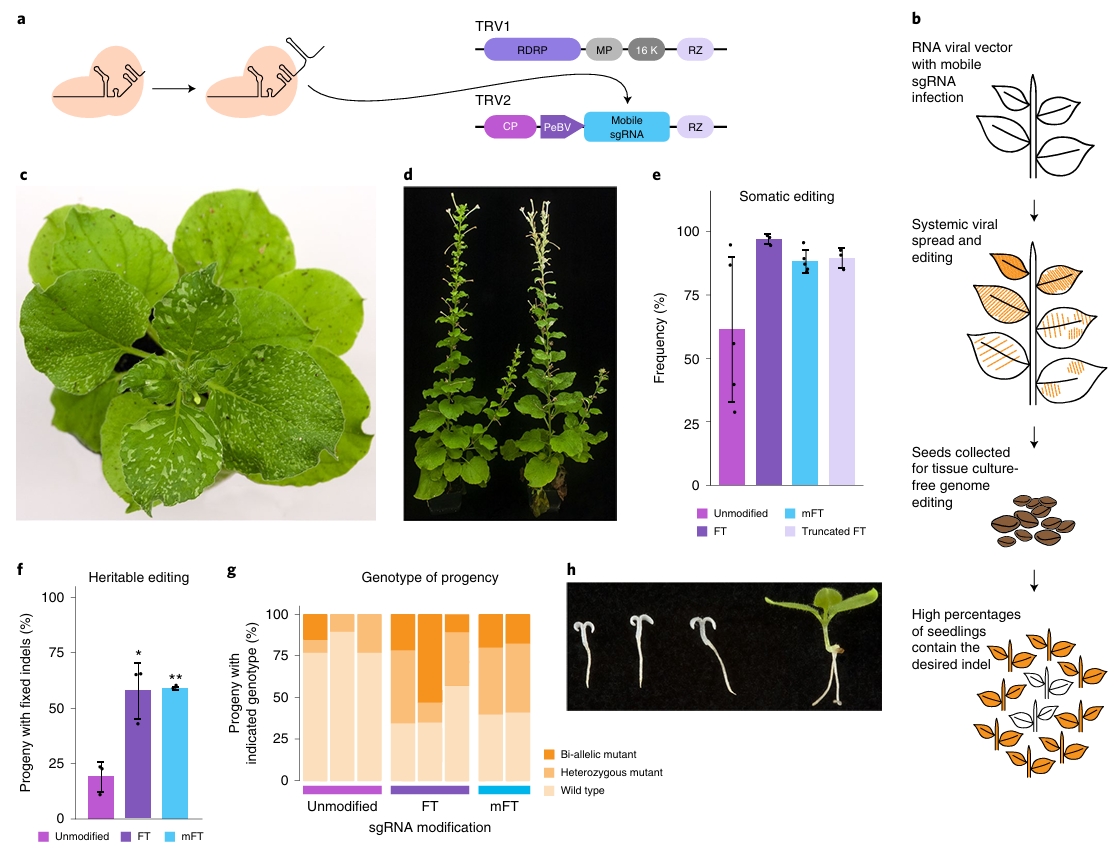
10.1038/s41477-020-0670-y - Agrobacterium is used to transfer viral DNA encoding viral RNA into Cas9 transgenic plants. The viral RNA expresses single guide RNAs that meld with Cas9 in the transgenic plants.
- "Cas9 transgenic plants are infected with an RNA virus that expresses single guide RNAs (sgRNAs). The sgRNAs are augmented with sequences that promote cell-to-cell mobility."
- "We hypothesized that, if fused to a sgRNA, FT might promote entry into the shoot apical meristem and create heritable gene edits at higher frequencies."
- "To test this hypothesis, we added the A. thaliana FT coding sequence to the 3′-end of a sgRNA that targets all alleles of phytoene desaturase (PDS) in Nicotiana benthamiana."
- "The sgRNAs fused to FT sequences were cloned into a tobacco rattle virus (TRV) vector that can be delivered to plants via infection by Agrobacterium tumefaciens"
- "Flowering Locus T is not the only RNA that moves between cells. Plant phloem exudates contain many transfer RNA-like sequences capable of cell-to-cell movement."
-
Procedure
- A universal pipeline for mobile mRNA detection and insights into heterografting advantages under chilling stress et al. Article ``
- ?
- Systemic spreading of exogenous applied RNA biopesticides in the crop plant Hordeum vulgare et al. Article ``
- ?
- Foliar-applied double-stranded RNA is mobile, transfers to plant pathogens, and triggers RNAi et al. Article ``
- ?
- tRNA-Related Sequences Trigger Systemic mRNA Transport in Plants
Zhang et al. 2016
Article
10.1105/tpc.15.01056 - "Phenotypic and enzymatic assays on grafted plants indicated that mRNAs harboring a distinctive TLS can move from transgenic roots into wild-type leaves and from transgenic leaves into wild-type flowers or roots; these mRNAs can also be translated into proteins after transport."
- "Our results suggest that tRNA-derived sequences with predicted stem-bulge-stem-loop structures are sufficient to mediate mRNA transport and seem to be necessary for the mobility of a large number of endogenous transcripts that can move through graft junctions."
- Impacts of RNA Mobility Signals on Virus Induced Somatic and Germline Gene Editing et al. Article ``
- ?
- Agrobacterium Transformation of Arabidopsis thaliana Roots et al. Article ``
- ?
- Agrobacterium-mediated plant transformation: biology and applications et al. Article ``
- ?
- Root Colonization by Agrobacterium tumefaciens Is Reduced in cel, attB, attD, and attR Mutants et al. Article ``
- ?
- RNA phloem transport mediated by pre-miRNA and viral tRNA-like structures
Lezzhov et al. 2019
Research Article
10.1016/j.plantsci.2019.04.005 - ?
- Systemic movement of FT mRNA and a possible role in floral induction
Jackson et al. 2012
Article
10.3389/fpls.2012.00127 - "This raises the possibility the FT mRNA may be moving systemically through the plant and into the SAM as an RNA–protein complex, whether FT protein is also a component of this mobile complex remains to be determined."
-
- Identification of mRNAs that Move Over Long Distances Using an RNA-Seq Analysis of Arabidopsis/Nicotiana benthamiana Heterografts et al. Article ``
- ?
- Selective Targeting of Mobile mRNAs to Plasmodesmata for Cell-to-Cell Movement et al. Article ``
- ?
- In planta Genome Editing in Commercial Wheat Varieties
? et al. ?
Review Article
doi - ?
- In Planta Genome Editing in Commercial Wheat Varieties: Use of TaQsd1 to Lengthen Seed Dormancy
? et al. ?
Review Article
doi - ?
- Enhancing gene editing and gene targeting efficiencies in Arabidopsis thaliana by using an intron‐containing version of ttLbCas12a
? et al. ?
Review Article
doi - ?
- Introduction of a second “Green Revolution” mutation into wheat via in planta CRISPR/Cas9 delivery
? et al. ?
Letter
doi - ?
- tRNA-Related Sequences Trigger Systemic mRNA Transport in Plants
? et al. ?
Review Article
doi - ?
- TLS (FUS) binds RNA in vivo and engages in nucleo-cytoplasmic shuttling
Zinszner et al. 1997
Research Article
10.1242/jcs.110.15.1741 - ?
- RNA Motifs and Modification Involve in RNA Long-Distance Transport in Plants
Wang et al. 2021
Review Article
10.3389/fcell.2021.651278 - ?
- Analyzing and Predicting Phloem Mobility of Macromolecules with an Online Database
? et al. ?
Review Article
doi - ?
- Developing a mobile RNA delivery system for grafting trait improvement
? et al. ?
Review Article
doi - ?
- Heritable gene editing using FT mobile guide RNAs and DNA viruses
? et al. ?
Review Article
doi - ?
- Mobile Flowering Locus T RNA – Biological Relevance and Biotechnological Potential
? et al. ?
Review Article
doi - ?
- Transgene-free plant genome editing via viral delivery of miniature CRISPR-Cas12f
? et al. ?
Review Article
doi - ?
- CRISPR genome editing in plants without tissue culture
Li et al. 2026
Review Article
10.1016/j.tibtech.2025.12.017 - ?
- Twenty years on: The inner workings of the shoot apical meristem, a developmental dynamo
? et al. ?
Review Article
doi - ?
- Plasticity of the Arabidopsis shoot apical meristem during floral transition
? et al. ?
Review Article
doi - ?
- A single-cell analysis of the Arabidopsis vegetative shoot apex
? et al. ?
Review Article
doi - ?
- Cellular parameters of the shoot apical meristem in Arabidopsis.
? et al. ?
Review Article
doi - ?
- Sweet Basil (Ocimum basilicum L.)―A Review of Its Botany, Phytochemistry, Pharmacological Activities, and Biotechnological Development
? et al. ?
Review Article
doi - ?
- Root Exudates in Soilless Culture Conditions
? et al. ?
Research Article
doi - ?
- The Shoot Apical Meristem: An Evolutionary Molding of Higher Plants
? et al. ?
Research Article
doi - ?
- Protective holobiome promotes strawberry tolerance of biotic stresses
? et al. ?
Research Article
doi - ?
- Root exudates in controlled environment agriculture: composition, function, and future directions
? et al. ?
Research Article
doi - ?
- Thermopriming reprograms metabolic homeostasis to confer heat tolerance
? et al. ?
Research Article
doi - ?
- Transcriptional memory and response to adverse temperatures in plants
? et al. ?
Research Article
doi - ?
- Cross-species analysis of abiotic stress in hydroponic leafy crops reveals conserved regulatory networks and key divergences.pdf
? et al. ?
Research Article
doi - ?
- Studying Thermopriming-Mediated Short- and Long-Term Acquired Thermotolerance in Arabidopsis thaliana
? et al. ?
Research Article
doi - ?
- Mechanical stress acclimation in plants: Linking hormones and somatic memory to thigmomorphogenesis
? et al. ?
Research Article
doi - ?
- Genomic and Epigenomic Changes in the Progeny of Cold-Stressed Arabidopsis thaliana Plants
? et al. ?
Research Article
doi - ?
- Genetic and epigenetic effects of plant-pathogen interactions: an evolutionary perspective
? et al. ?
Research Article
doi - ?
- Brief temperature stress during reproductive stages alters meiotic recombination and somatic mutation rates in the progeny of Arabidopsis
? et al. ?
Research Article
doi - ?
- Hyperosmotic priming of Arabidopsis seedlings establishes a long-term somatic memory accompanied by specific changes of the epigenome
Brief temperature stress during reproductive stages alters meiotic recombination and somatic mutation rates in the progeny of Arabidopsis
? et al. ?
Research Article
doi - ?
- Epigenetics in the modern era of crop improvements
? et al. ?
Research Article
doi - ?
- Stress resilience in plants: the complex interplay between heat stress memory and resetting
? et al. ?
Research Article
doi - ?
- Epigenetic Regulation of Plant Gametophyte Development
? et al. ?
Research Article
doi - ?
- Brief temperature stress during reproductive stages alters meiotic recombination and somatic mutation rates in the progeny of Arabidopsis
? et al. ?
Research Article
doi - ?
- Role of Epigenetic Factors in Response to Stress and Establishment of Somatic Memory of Stress Exposure in Plants
? et al. ?
Research Article
doi - ?
- Epigenetic and chromatin-based mechanisms in environmental stress adaptation and stress memory in plants
? et al. ?
Research Article
doi - ?
- Arabidopsis shoot stem cells display dynamic transcription and DNA methylation patterns
? et al. ?
Research Article
doi - ?
- The molecular basis of heat stress responses in plants
? et al. ?
Research Article
10.1016/j.molp.2023.09.013 - ?
- ? ? et al. ? Research Article ``
- ?
- ? ? et al. ? Research Article ``
- ?
- ? ? et al. ? Research Article ``
- ?
- ? ? et al. ? Research Article ``
- ?
- ? ? et al. ? Research Article ``
- ?
Agrobacterium-Mediated Infiltration
- Heritable transgene-free genome editing in plants by grafting of wild-type shoots to transgenic donor rootstocks
Awan et al. 2026
Review Article
10.1038/s41587-022-01585-8 - Uses Agrobacterium-mediated infiltration.
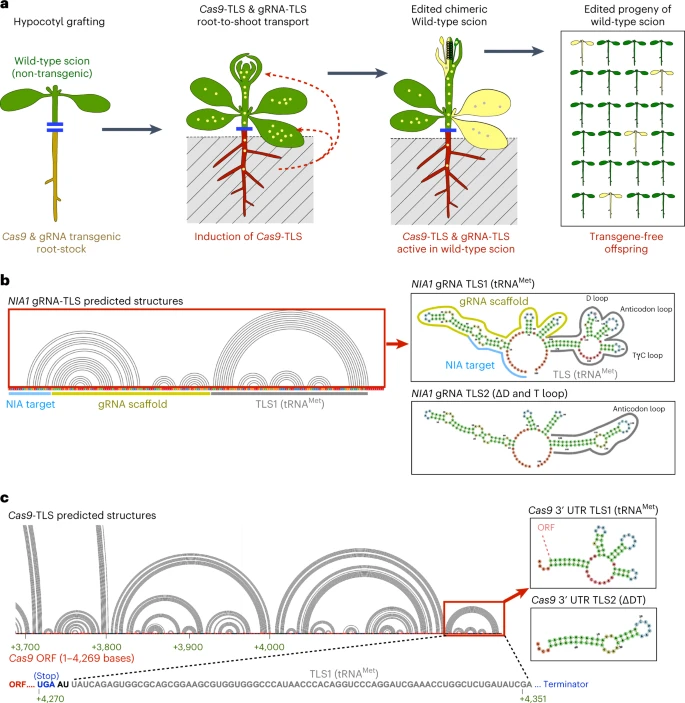
- " We postulated that the addition of TLS motifs to Cas9 and gRNA transcripts will result in their root-to-shoot movement and cause editing in recipient-grafted wild-type tissues."
-
Procedure
- Plant gene editing through de novo induction of meristems
Maher et al. 2019
Research Article
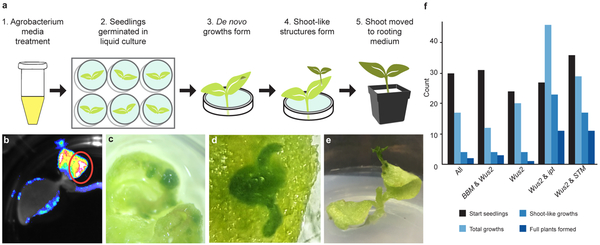
10.1038/s41587-019-0337-2 - "Here, we report that concomitant expression of DRs and gene editing reagents creates transgenic and gene edited shoots through de novo meristem induction. Further, these shoots produce flowers and seeds and ultimately transmit transgenes and gene edits to the next generation."
- "The first step in Fast-TrACC is the optimization of A. tumefaciens cultures for gene transfer (1). Seedlings are germinated in 6-well plates and co-cultured with the optimized A. tumefaciens strains (2). After approximately two weeks, dark green growths begin to form (3) that ultimately produce shoot-like structures (4). The shoot-like growths are then induced to form roots."
-
Procedure
In Planta Particle Bombardment
(iPB)
- In planta particle bombardment (iPB): A new method for plant transformation and genome editing
Imai et al. 2020
Research Article
10.5511/plantbiotechnology.20.0206a - "Our in planta particle bombardment (iPB) method utilizes the shoot apical meristem (SAM) as a target tissue."
- "The SAM contains a subepidermal cell layer termed L2, from which germ cells later develop during floral organogenesis."
-
Procedure
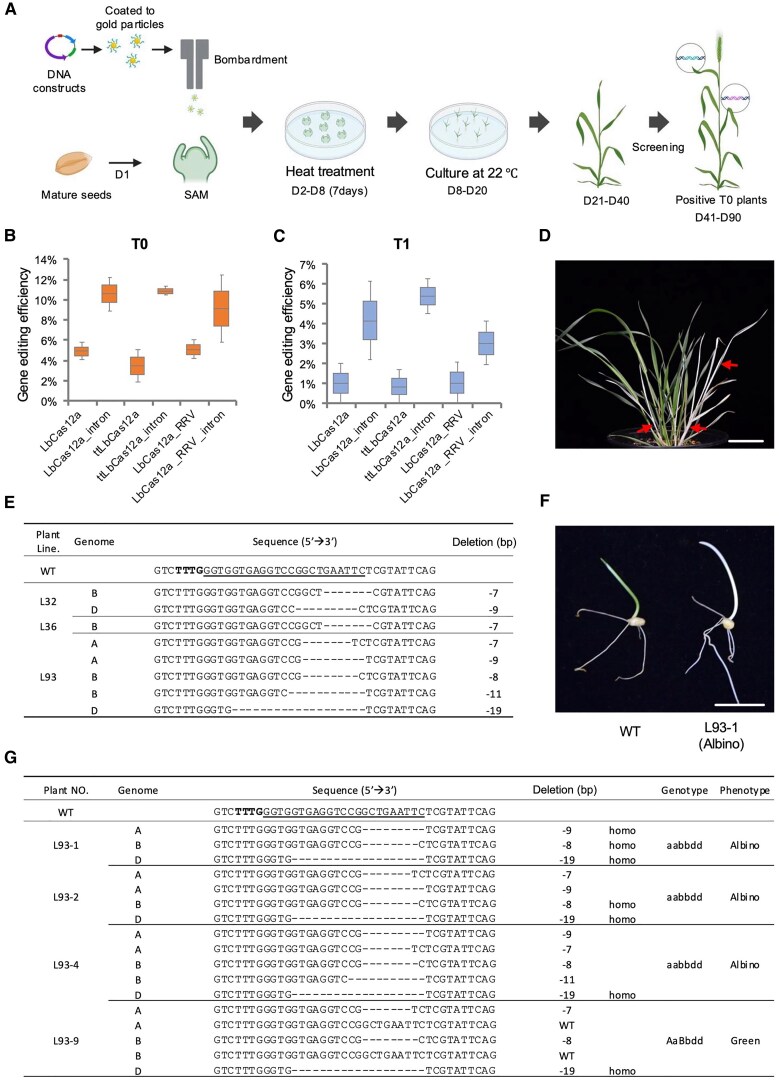
- Efficient genome editing by CRISPR-Cas12a in common wheat via shoot apical meristem delivery
Luo et al. 2025
Letter
10.1093/plphys/kiaf611 - Uses particle bombardment.
-
Procedure
- An in planta biolistic method for stable wheat transformation
Hamada et al. 2017
Review Article
10.1038/s41598-017-11936-0 - Uses in planta particle bombardment.
-