Background
One of the top requests that I've received is to write about peptides, and today's new article tackles a specific peptide, thymosin beta 4.
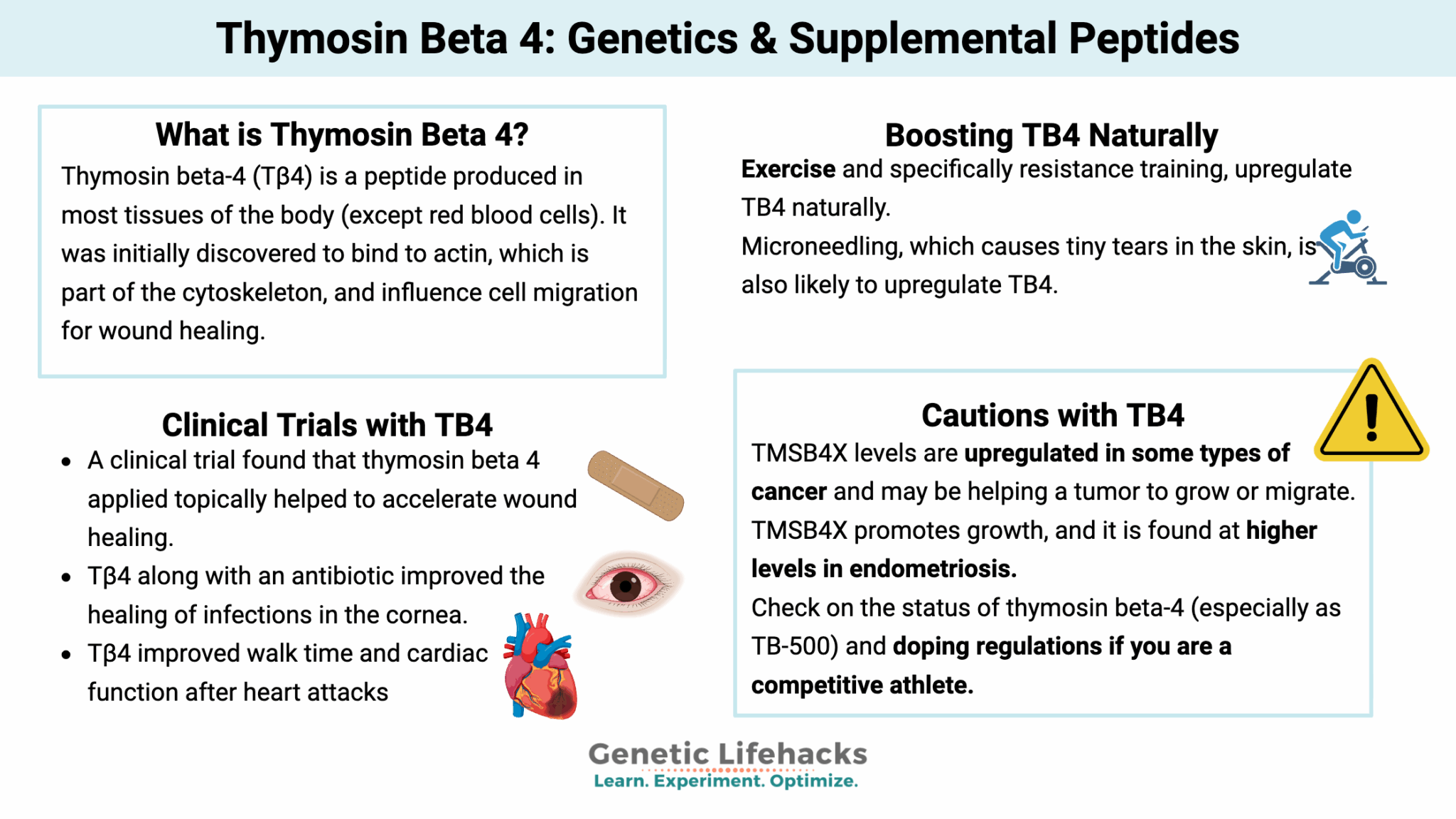
Peptides are simply short chains of amino acids. They can be produced in the body or synthesized as medications or supplements. Thymosin beta 4 is both produced endogenously and available as a peptide supplement. It is important in growth, wound healing, and the prevention of fibrosis. In the new article, I dig into the research on the gene that encodes thymosin beta 4, as well as the clinical trials on supplemental thymosin beta 4 fragments.
I find peptide therapy interesting and think it has a lot of potential for improving certain aspects of health. However, the research on most peptides is pretty scant.
Let me know (just reply to this email) if there is a specific peptide that you want to know more about.
I've also been busy updating articles with genetic variants and new research studies. On my list of updated articles this week:
• Estrogen metabolism - updated with studies on hormone replacement therapy (HRT) and genetic interactions with cancer risk. • Acetaminophen - updated with new studies on liver damage as well as neurodevelopmental studies. • Zinc - added clarity on the zinc transporter functions, as well as a couple of additional zinc-related SNPs. An aside: Topics that are well covered in research studies, like stroke, heart disease, and cancer, have hundreds of thousands of papers published each year. The things that I get asked about most, like estrogen and progesterone replacement therapy, have oddly few studies compared to the vast number of people affected. About a thousand papers were published on HRT last year, with almost all being reviews or tangential to the topic. I always feel bad when I can't give someone a definitive answer to a question like "Will HRT interact with my genes to give me cancer or protect me from heart disease?" But I don't want to speculate beyond what is shown in research on such an important topic.
Key Takeaways
- Thymosin Beta 4 (Tβ4) is a naturally occurring peptide involved in wound healing, inflammation reduction, tissue regeneration, and is produced in nearly all cell types.
- It is encoded by the TMSB4X gene, with higher levels during fetal development and important roles in brain, lung, and eye health.
- Thymosin beta 4 is also available as a peptide supplement – usually as a fragment that is both active and more easily absorbed.