Background
A new study on microplastics shows that they affect the immune system in ways that I hadn't considered -- including affecting our response to fungal infections, such as Candida.
A little background: Macrophages are immune system cells that engulf and destroy bacteria and fungi, as well as damaged or cancerous cells of your own. So they are important both for maintaining your own healthy cells as well as getting rid of pathogens.
The researchers found that macrophages clean up microplastics too. We now all have tiny microscopic bits of different types of plastic inside us, and macrophages can 'eat' them to clean up. The problem that this new study found is that when macrophages are exposed to microplastics, they end up being less able to clean up our own damaged cells. The exposed macrophages actually created more methylglyoxal, producing more advanced glycation end products. Not good...
Here's where this ties into my new article.
The macrophages that were exposed to microplastics were no longer able to take care of bacteria and fungi as effectively. The study specifically looked at fungal pathogens and found that microplastics decreased the immune response to fungal pathogens, allowing them to survive and proliferate.
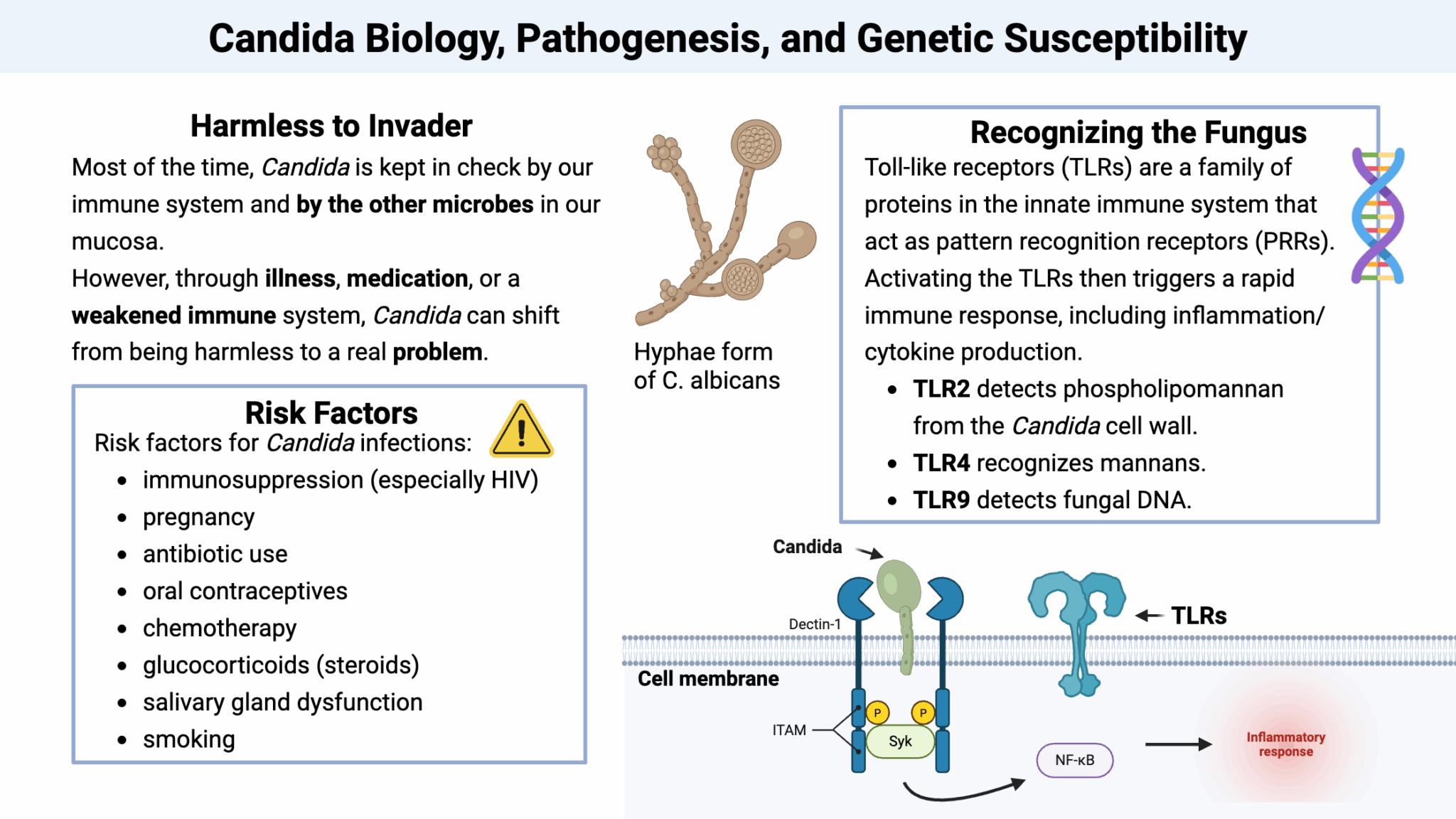
My new article this week is on Candida, which is a fungus that is generally not harmful but can overwhelm the immune system at times. We live in balance with the microbes that live on and in us -- but that balance can tip pretty easily, allowing for a nice little commensal fungus like Candida to explode. When the immune system is suppressed, whether due to microplastics, medications, or genetics, then Candida can become a difficult problem to solve.
Check out the article for the background science on how Candida affects you, plus genetics and natural solutions. My thanks to the several members who have requested this article over the past year or two!
Key Takeaways
- Candida is normally harmless, but shifts to a pathogen when the immune balance is disrupted.
- Genetic variants in key immune pathways can strongly influence who is likely to get recurrent or severe Candida infections.
- Candida overgrowth can interact with or exacerbate other conditions, including PANDAS/PANS, fatty liver disease, Alzheimer’s, COPD, IBD, and histamine intolerance.
- Understanding your Candida‑related genetic variants can help tailor prevention strategies and choose the right therapies.