Key Takeaways
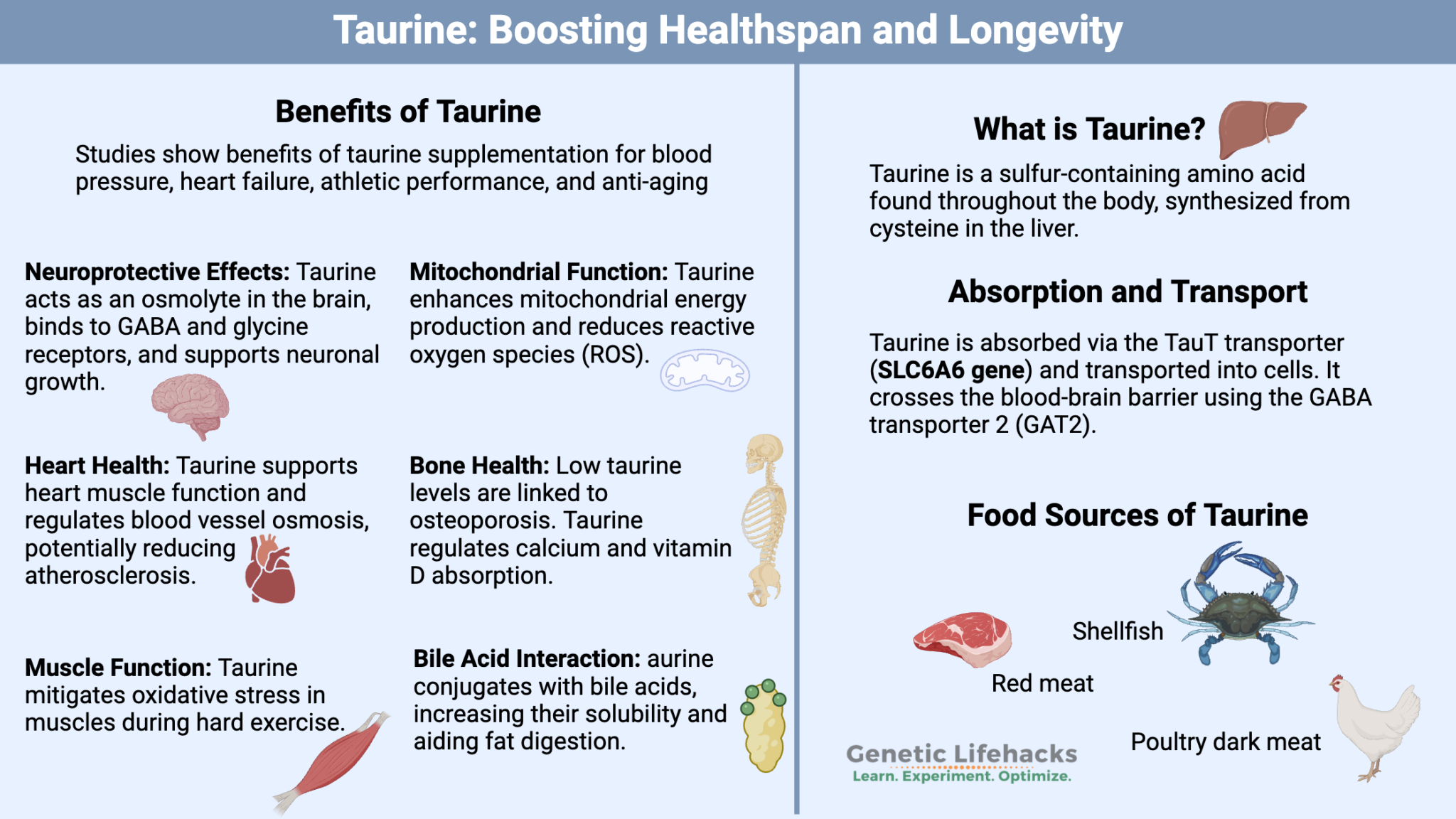
- Increasing taurine levels may be beneficial for healthspan and healthy longevity.
- Taurine helps mitochondrial energy production, acts as an antioxidant, balances calcium in cells, interacts with bile acids, and is neuroprotective.
- Your cells can synthesize some taurine, but you also need to get taurine from food. Taurine levels decrease in aging, and supplemental taurine may help prevent the diseases associated with aging (e.g. heart disease, osteoporosis, high blood pressure, mitochondrial dysfunction).
Taurine and Eye Health:
Taurine may also help with visual fatigue, improve eye health, and reduce the risk of cataracts. The retina uses a lot of energy, and subsequently produces reactive oxygen species as part of that process. Visual fatigue is caused by an excess of metabolic waste in the eye, meaning there is a demand for mitochondrial energy production that isn’t balanced with antioxidants.
Taurine is used in the eye in several ways:1
Glutathione is an antioxidant that balances ROS in the eye. Taurine supplementation allows for more cysteine to be available for glutathione synthesis. Taurine also directly promotes photoreceptor cell function. Excess cell death in the eye is also prevented by taurine supplementation. Animal studies show that taurine plays an essential role in eye health and vision:
Taurine depletion causes thinning of the retina and eventual photoreceptor death.2 Taurine supplementation helps to prevent cataract formation when glutathione levels are depleted.3