Molybdenum
Key Takeaways
- Molybdenum is an essential trace mineral that we get in small amounts through our diet.
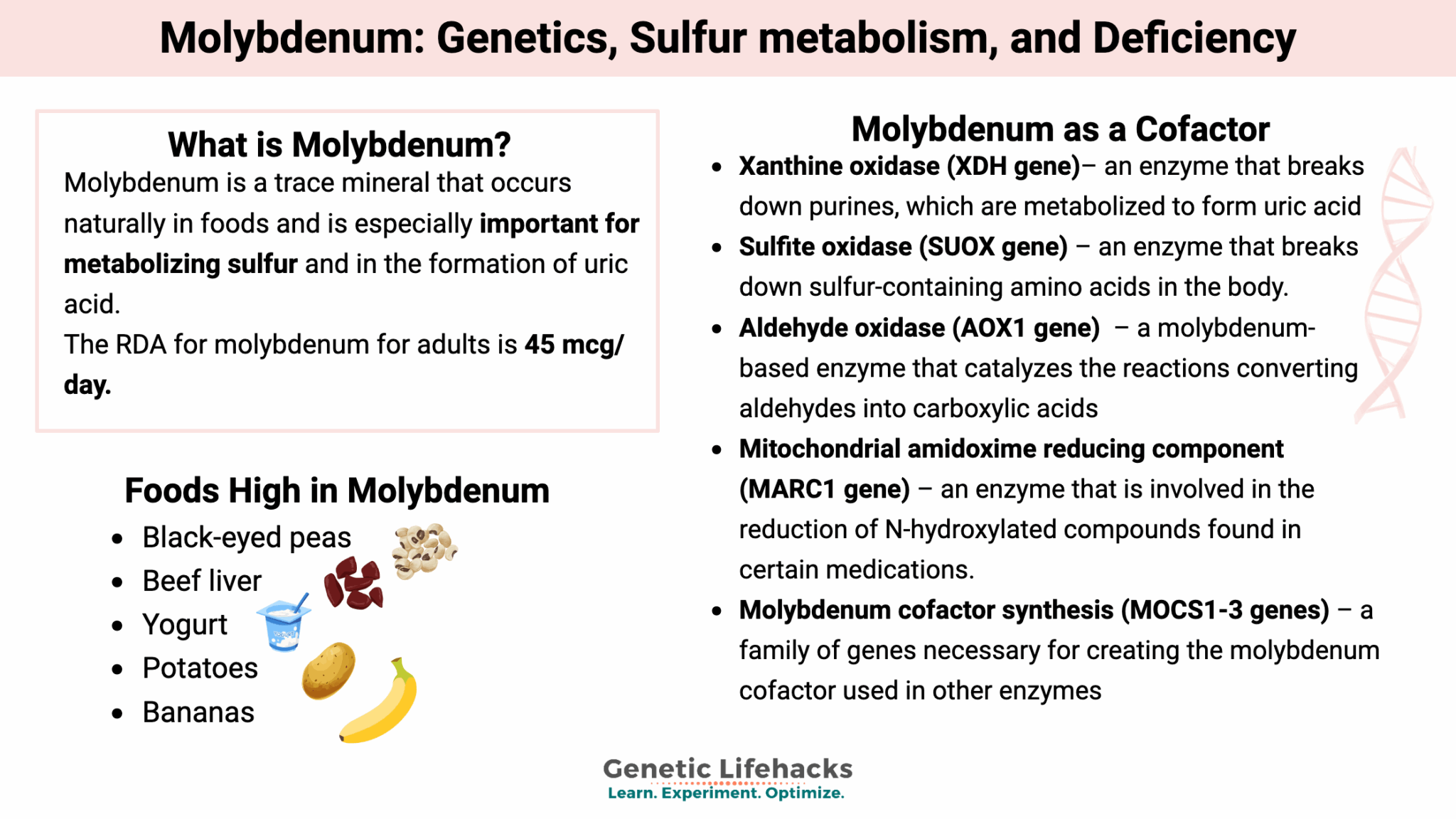
- As a cofactor, molybdenum is essential for the metabolism of sulfur-containing amino acids, breaking down purine, and the metabolism of certain medications.
- A few common genetic variants mildly affect molybdenum-dependent enzymes, while rare mutations related to molybdenum can have a large effect size.
Micronutrients and trace minerals:
Trace minerals are important in small amounts because they can act as cofactors for the enzymes that drive cellular reactions.
This week's new article and genotype report focuses on molybdenum as a micronutrient cofactor. It explains why molybdenum is essential as a cofactor for enzymes that break down sulfur-containing amino acids, as well as purine metabolism. Foods high in molybdenum include black-eye peas, liver, lima beans, and dairy products. Molybdenum is also naturally occurring in the water in many regions.
Table 1: My Genetic Variants
TODO