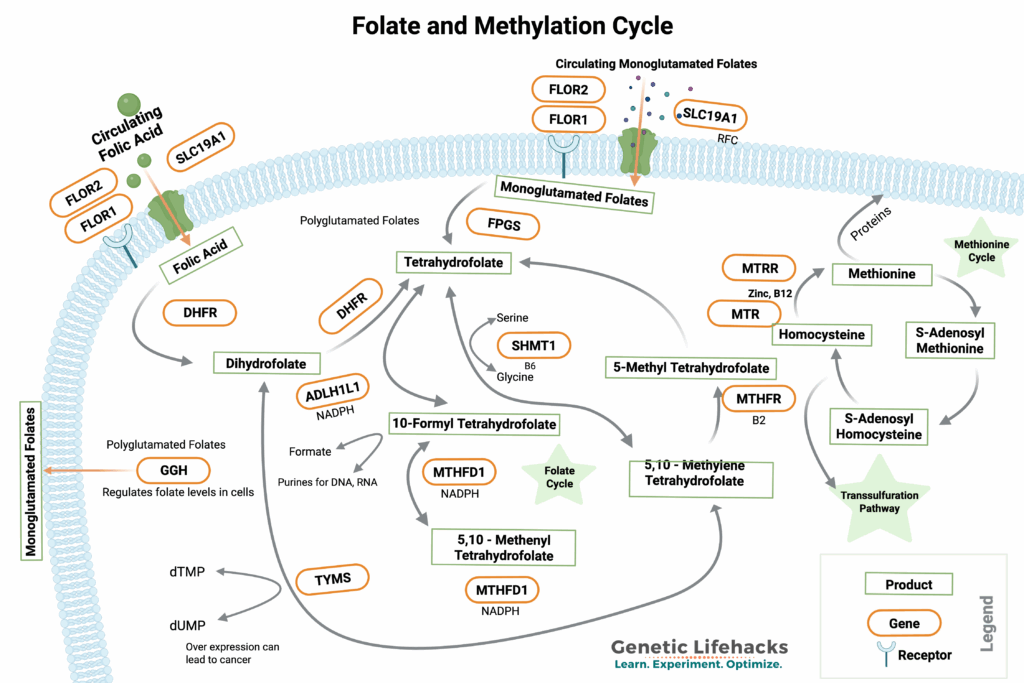
About the Methylation Cycle
The methylation cycle is a critical biochemical pathway involved in numerous essential functions, including DNA synthesis and repair, neurotransmitter production, detoxification, and regulation of gene expression. Genetic variations in key enzymes of this pathway can affect methylation capacity and may influence health outcomes. This report analyzes genetic variants in genes encoding critical enzymes in the methylation cycle.
Folate and Methionine Cycle created in biorender
MTHFR
Methylenetetrahydrofolate Reductase
Your Genotypes C677T AA A1298C TT Gene Function: The MTHFR gene encodes the enzyme methylenetetrahydrofolate reductase, which converts folate (vitamin B9) into its active form, 5-methyltetrahydrofolate. This enzyme is central to the methylation cycle and works together with vitamin B12 to produce methyl groups that are involved in numerous biological processes.
Methyl groups produced through this pathway are used for:
Neurotransmitter synthesis: Creating molecules like serotonin and melatonin DNA methylation: Controlling gene expression and maintaining DNA integrity Detoxification: Breaking down substances like arsenic and mercury Cardiovascular health: Regulating homocysteine levels Included Variants SNP ID Effect Allele Your Genotype Status rs1801133 C677T A AA Homozygous Variant rs1801131 A1298C G TT Typical Significance: MTHFR C677T homozygous variant decreases the function of the enzyme by about 70%, which can affect methylation capacity and health outcomes. Research has associated these variants with increased risk for several conditions: Cardiovascular health: Elevated homocysteine levels, increased risk of heart disease and stroke, and reduced endothelial function affecting blood pressure regulation Mental health: Increased susceptibility to depression and anxiety, particularly in individuals with inadequate folate intake Pregnancy outcomes: Higher risk of neural tube defects, preeclampsia, hypertension in pregnancy, and miscarriage Migraines: Significantly increased risk, particularly migraines with aura Detoxification: Reduced capacity to detoxify arsenic and potentially mercury Important note: These variants also show protective effects against certain cancers, including colon, prostate, gastric, and oral cancers. This represents an evolutionary trade-off where reduced folate availability may protect against rapidly dividing cancer cells.
Lifehacks for optimizing folate: Optimizing your diet and nutrient intake is the most effective way to support healthy methylation when you have MTHFR variants
Increase natural folate sources: Leafy green vegetables (spinach, kale), legumes (lentils, chickpeas), liver, asparagus, broccoli, and Brussels sprouts Boost choline intake, if low: Egg yolks, beef liver, wheat germ, and soybeans to support alternative methylation pathways Add betaine-rich foods: Beets, quinoa, and spinach provide methyl groups through a parallel pathway Consider riboflavin (B2): Vitamin B2 helps stabilize the MTHFR enzyme and is particularly beneficial for C677T carriers. Food sources include dairy products, eggs, and almonds Vitamin B12: Essential for the methylation cycle to function properly, vitamin B12 is found in animal products like meat, fish, and dairy Creatine: About 40% of methyl groups are used for creatine synthesis. Supplemental creatine has been shown to lower high homocysteine levels.
Slow COMT function: Your genetic data also indicates slow COMT enzyme function. Many people with this genotype report mood swings or irritability with methylfolate or methylB12 supplements. Consider supporting methylation through diet or with a low dose of folinic acid instead of methylfolate.
Full details and references: https://www.geneticlifehacks.com/mthfr/
COMT
Catechol-O-Methyltransferase
Your Genotypes Val158Met AA
Gene Function The COMT gene encodes catechol-O-methyltransferase, an enzyme that breaks down catechols, including the neurotransmitters dopamine, epinephrine, and norepinephrine. COMT uses methyl groups from the methylation cycle to metabolize these important brain chemicals.
COMT’s essential roles:
Neurotransmitter regulation: Maintains dopamine, epinephrine, and norepinephrine at optimal levels Protects against oxidative stress: Without COMT, catecholamines accumulate and generate free radicals that can damage DNA and brain cells Estrogen metabolism: Converts estrogen metabolites into forms that can be easily excreted Uses methyl groups: The “methyl” in catechol-O-methyltransferase reflects its use of methylation in breaking down catechols Pain perception: Affects neurotransmitter levels that influence pain threshold and chronic pain conditions Connection to methylation: COMT is a major consumer of methyl groups from the methylation cycle, creating an important link between methylation status and neurotransmitter function.
Included Variants SNP ID Effect Allele Your Genotype Status rs4680 Val158Met A AA Homozygous Variant Significance Your genotype for rs4680 is A/A (Met/Met) – Slow COMT (20% of population):
Enzyme is less stable, breaks down faster at body temperature Results in ~40% lower COMT activity Higher dopamine levels in the brain Better cognitive performance and memory Lower pain threshold, higher pain sensitivity 3x more common in fibromyalgia patients More susceptible to anxiety, mood swings, irritability May have adverse reactions to methyl donor supplements Methyl Donor Supplement List: Supplements that donate a methyl group include:
Methylfolate and Methylcobalamin (methylB12) SAMe and TMG (Betaine) DMSO Supplements that inhibit or slow COMT function include:
Quercetin Fisetin Luteolin and Rutin Full details and references: https://www.geneticlifehacks.com/comt-and-supplement-interactions/
MTR and MTRR
Methionine Synthase and Methionine Synthase Reductase
Your Genotypes A2756G AG A66G GG Gene Function MTR (methionine synthase) and MTRR (methionine synthase reductase) code for two enzymes that work together in the methylation cycle.
The MTR gene works in the final step to regenerate homocysteine into methionine using methyl-B12 (methylcobalamin) MTRR regenerates the methylcobalamin for MTR to use again. Both are a vital part of the methylation cycle.
Included Variants SNP ID Effect Allele Your Genotype Status rs1805087 A2756G G AG Heterozygous rs1801394 A66G G GG Homozygous Variant Significance: The rs1805087 AG genotype indicates slightly increased MTR activity and altered homocysteine levels.
The rs1801394 GG genotype has slightly reduced MTRR activity and methylation ability.
Lifehacks for optimal B12: Everyone needs adequate vitamin B12 and folate intake for optimal methylation cycle function. For individuals with MTRR reduced activity, it is even more important to ensure:
Vitamin B12-rich foods: Meat, fish, eggs, dairy products, and fortified foods. Vegans and vegetarians should consider B12 supplementation Folate from food: Leafy greens, chicken liver, beef liver, asparagus, broccoli, and legumes Limit alcohol: Alcohol is metabolized into acetaldehyde, which inhibits methionine synthase. Those with reduced MTR activity should avoid excessive alcohol consumption Forms of supplemental B12 that should work well with your COMT genotype:
Adenosylcobalamin or hydroxocobalamin (avoid methylB12)
Full details and references: https://www.geneticlifehacks.com/how-do-your-genes-influence-your-vitamin-b12-levels/
FOLR1
Folate Receptor Alpha
Your Genotype rs144637717 TT rs2071010 GG Gene Function FOLR1 encodes folate receptor alpha (FRα), a cell‑surface receptor that binds folate and helps transport it into specific tissues, including the placenta and the brain. FRα is especially important where higher‑than‑serum folate levels are needed, making it key for fetal development and ongoing brain function.
Included Variants SNP ID Effect Allele Your Genotype Status rs144637717 C TT Typical rs2071010 A GG Typical Significance: Rare FOLR1 mutations (not covered here) cause cerebral folate deficiency, with low CSF 5‑MTHF but normal systemic folate, leading to epilepsy, ataxia, intellectual disability, and sometimes autism features. Beyond genetics, folate receptor alpha autoantibodies are a major acquired cause of cerebral folate deficiency, found in a large fraction of autism cases with low CSF folate.
Full details and references: https://www.geneticlifehacks.com/folr1-and-folr2-transporting-folate-and-folic-acid-into-cells/
DHFR
Dihydrofolate reductase
Your Genotypes rs1650697 GG rs70991108 AA Gene Function DHFR encodes an enzyme that converts dihydrofolate into tetrahydrofolate.
Included Variants SNP ID Effect Allele Your Genotype Status rs1650697 A GG Typical rs70991108 D AA Significance:
The rs1650697 GG genotype is the typical genotype with no impact on enzyme function.
DHFR genetic variants impact how efficiently the body can convert folic acid (the synthetic form found in supplements and fortified foods) into tetrahydrofolate. This has several important implications:
Unmetabolized folic acid: People with DHFR variants have a reduced capacity to process folic acid, leading to unmetabolized folic acid accumulating in the bloodstream. Studies show this can occur with doses as low as 200-400 mcg of folic acid Enzyme inhibition: Excess unmetabolized folic acid may inhibit DHFR from converting dihydrofolate to tetrahydrofolate when cells need it, creating a paradoxical situation where high folic acid intake leads to functional folate deficiency Natural killer cell function: High levels of unmetabolized folic acid are associated with decreased natural killer cell activity, which is part of the body’s defense against cancer. Lifehacks: Individuals with DHFR variants should be cautious with folic acid intake and consider alternative forms of folate if taking supplements:
Limit folic acid intake: Read labels and be cautious with consuming a lot of folic acid from fortified foods. Folic acid is added to enriched bread, flour, cornmeal, rice, pasta, breakfast cereals, and other grain products. Focus on natural folate: Food sources include leafy greens, legumes, liver, asparagus, and broccoli. Full details and references: https://www.geneticlifehacks.com/folic-acid-supplementation-and-your-genes/
MTHFD1
Methylenetetrahydrofolate Dehydrogenase, Cyclohydrolase, and Formyltetrahydrofolate Synthetase 1
Your Genotype G1958A AG Gene Function The MTHFD1 gene encodes methylenetetrahydrofolate dehydrogenase, a trifunctional enzyme that catalyzes three sequential reactions in the folate cycle. This makes it essential for DNA synthesis, DNA repair, and DNA methylation.
MTHFD1’s role in the folate cycle:
Multiple enzymatic functions: Performs three different reactions within the folate pathway Creates nucleotides: Essential for producing purines needed for DNA and RNA Supports methylation: Helps create methyl groups used throughout the body Serine-glycine metabolism: Involved in the interconversion of these amino acids Included Variants SNP ID Effect Allele Your Genotype Status rs2236225 G1958A A AG Heterozygous rs1076991 T CT Heterozygous Significance: MTHFD1 genetic variants affect the body’s ability to process folate effectively.
Your genetic data shows the G1958A variant, which is associated with:
Increased choline dependency: People with the G1958A variant are much more likely to develop choline deficiency on a low-choline diet, requiring approximately double the choline intake Cardiovascular risk: Variants associated with increased relative risk of acute myocardial events Your genetic data shows the rs1076991 variant, which is associated with:
A minor increase in the need for choline. Increased relative risk of acute myocardial events Lifehacks: Choline: The recommended adequate intake for choline for adults is 550 mg/day for men and 425 mg/day for women, with more needed during pregnancy and breastfeeding.[ref]
Managing MTHFD1 variants requires attention to both folate and choline intake:
Increase choline: Carriers of the G1958A A-allele may need a little more than the RDA to meet their needs. Premenopausal women with this variant were 15 times more likely to show choline deficiency symptoms on low-choline diets. Choline-rich foods include beef liver, eggs, beef, chicken, fish, and soybeans. Optimize folate intake: Focus on folate-rich foods such as beef liver, lentils, black beans, broccoli, Brussels sprouts, and edamame. Consider folinic acid: May be particularly beneficial for MTHFD1 variants (in addition to or instead of methylfolate) Full details and references: https://www.geneticlifehacks.com/mthfd1/
AHCY
Adenosylhomocysteinase
Your Genotype rs819146 TT Gene Function The AHCY gene encodes adenosylhomocysteinase, the only enzyme in mammals that can convert SAH (S-adenosyl homocysteine) to homocysteine. This enzyme is critical for regulating methylation throughout the body.
AHCY’s central role in methylation:
Converts SAH to homocysteine: This is the only pathway for this essential conversion Regulates SAM/SAH ratio: Maintains the balance between the methylation donor (SAM) and its inhibitor (SAH) Controls methylation capacity: High SAH levels inhibit SAM, reducing methylation throughout the body Integrates with circadian rhythm: AHCY levels work with clock genes to regulate DNA methylation throughout the day
Included Variants SNP ID Effect Allele Your Genotype Status rs819146 G TT Typical Significance:
Rare mutations (not covered here): Severe AHCY deficiency causes significant physical and cognitive developmental impairments from infancy. However, common AHCY variants are considered benign by geneticists and don’t significantly impact function.
Altered AHCY levels have wide-ranging effects. Note that epigenetic effects are more likely to cause these changes in AHCY levels, rather than inherited genetic mutations.
SAM/SAH ratio and dementia: Higher SAM/SAH ratios (higher SAM, lower SAH) are associated with lower dementia risk in older adults. High SAH levels correlate with increased dementia risk Atherosclerosis: Low AHCY levels increase calcification in coronary arteries and atherosclerotic disease Homocysteine regulation: Elevated SAH increases homocysteine, which is linked to heart disease, stroke, osteoporosis, and dementia DNA methylation control: AHCY levels integrate with circadian clock genes to regulate when genes are turned on/off throughout the day Lifehacks to support AHCY: Unlike some other methylation genes, common AHCY variants don’t have significant research showing they require specific interventions. Supporting healthy AHCY function focuses on the broader methylation cycle:
Caution with SAMe supplements: Taking SAMe supplements may disrupt biological rhythms rather than improve methylation. Excess SAMe is broken down into compounds that actually inhibit methylation. Research shows SAMe supplementation “disrupts biological rhythms”.[ref] Check other methylation genes: Since AHCY sits at the center of the methylation cycle, optimizing MTHFR, MTR, MTRR, and other methylation genes will support healthy AHCY function Support circadian rhythms: Since AHCY integrates with circadian clock genes, maintaining regular sleep-wake cycles supports proper methylation patterns Full details and references: https://www.geneticlifehacks.com/ahcy-gene-tying-together-methylation-and-homocysteine/
CBS
Cystathionine Beta-Synthase
Your Genotype rs5742905 AA Gene Function The CBS gene encodes cystathionine beta-synthase, an enzyme that acts within the transsulfuration pathway. CBS provides an alternative pathway for homocysteine metabolism, converting it toward cysteine and eventually glutathione production.
CBS enzyme functions:
Reduces homocysteine: Converts homocysteine to cystathionine (an intermediate toward cysteine) Glutathione production: The pathway eventually produces glutathione, a crucial antioxidant Hydrogen sulfide creation: Participates in desulfation to create H2S (hydrogen sulfide), needed in precise amounts Requires vitamin B6: B6 is an essential cofactor for the CBS enzyme to function Balance is key: Hydrogen sulfide must be maintained at proper levels – it acts as a mitochondrial electron donor at low levels but becomes poisonous to mitochondria at high levels.
Included Variants SNP ID Effect Allele Your Genotype Status rs234706 C699T A GG Typical rs5742905 T AA Typical Significance Your genetic data shows that you have the normal version of CBS C699T with no change in CBS enzyme function. You also have the typical version of rs5742905.
Full details and references: https://www.geneticlifehacks.com/cbs/
Genotype Status Legend Normal: No variant copies detected Heterozygous: One variant copy detected Homozygous Variant: Two variant copies detected Disclaimer: This report is for informational purposes only and should not be used as a substitute for professional medical advice, diagnosis, or treatment. Please consult with a qualified healthcare provider to interpret these results in the context of your individual health status.
For full references and details, see the related articles on GeneticLifehacks.com.