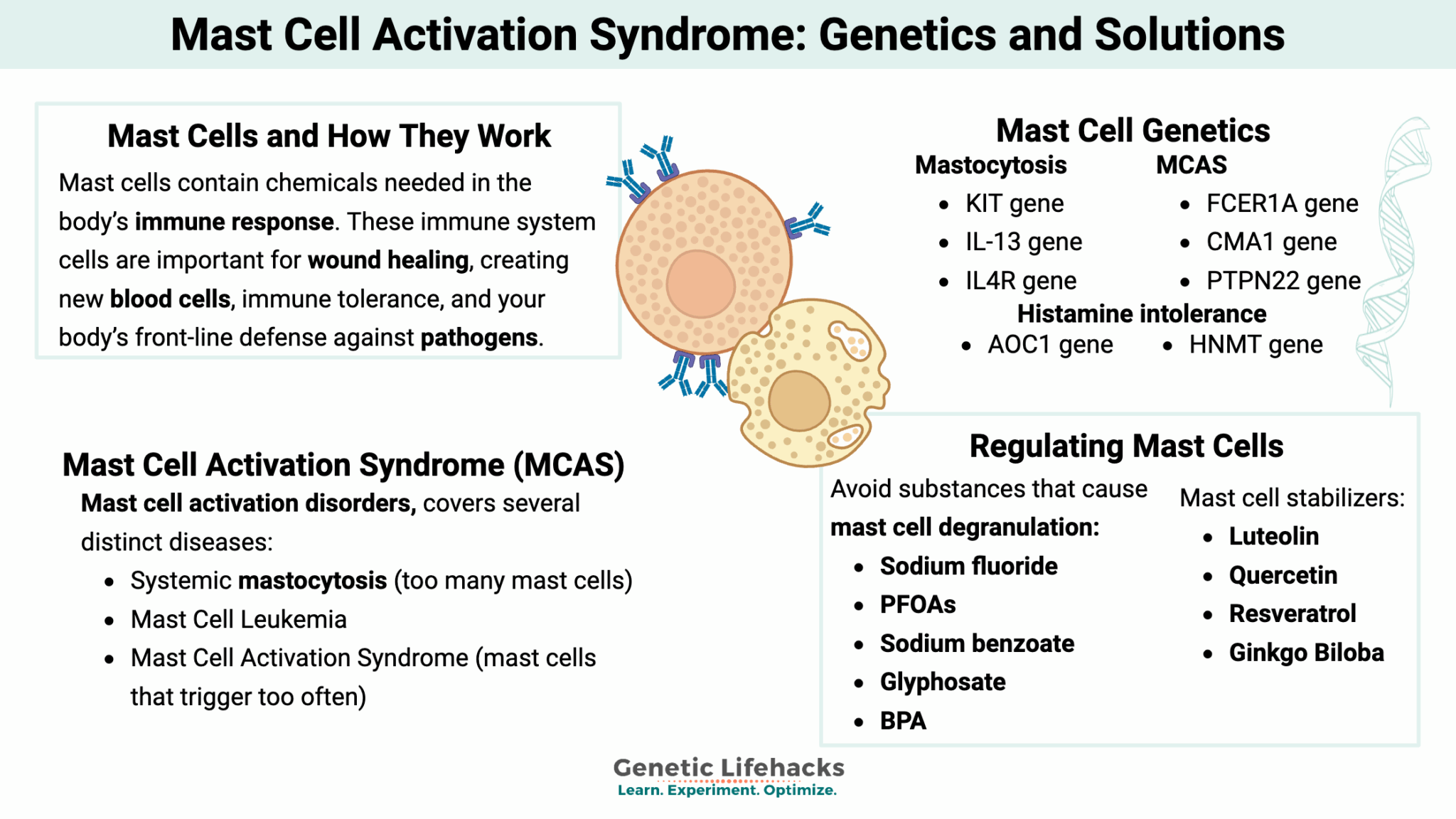
Key Takeaways
- Mast cells are essential immune cells, but can cause problems if overactive.
- Mast Cell Activation Syndrome (MCAS) involves mast cells that are activated easily and excessively.
- Symptoms of MCAS can include abdominal pain, nausea, itching, flushing, hives, headaches, heart palpitations, anxiety, brain fog, and anaphylaxis.
- Mast cell disorders overlap with many other conditions, including autoimmune, autonomic, and connective tissue diseases.
- Genetic variants interact with susceptibility to MCAS in multiple ways.
Mast Cells, Thyroid Hormone, and Histamine
Mast cells are a type of immune system cell that hang out in vulnerable areas of the body that are exposed to pathogens -- like the intestines, skin, nose, lungs, and blood vessels. When exposed to a triggering substance, mast cells can degranulate, releasing a payload of histamine, proteases, and inflammatory mediators.
Mast Cells Interact with Thyroid Hormones
Thyroid hormones regulate and fine-tune metabolism, cardiac output, respiratory rate, alertness, and reproductive health. Thyroid hormones work by binding to thyroid hormone receptors that then turn on or off genes for transcription.
In essence, optimal thyroid levels are important for energy, feeling good, and overall well-being.
Hypothyroidism affects ~10% of the population, with higher rates among women and adults over 60.[ref]
Here's the mast cell connection: Low thyroid levels (hypothyroidism) cause increased mast cell activation and increased histamine levels. In animals, hypothyroidism increased histamine by 50%.
This means if you're dealing with mast cell issues, thyroid testing may be worthwhile. If you have untreated low thyroid, understanding the effect on mast cells is important.
This is just one example of how mast cells interact with other conditions.
Check out the mast cell article if you are interested in osteoarthritis, asthma, aFib, urticaria, interstitial cystitis, rheumatoid arthritis, celiac, neuropathy, rosacea, POTS, or hEDS.
Then, think about the connections between environmental factors (e.g. PFAS, glyphosate, sodium fluoride, and BPA all trigger mast cell degranulation), thyroid health, histamine type reactions, and mast cells.